2022 Conference: Coups D’Etat
Saturday 12th March 2022
The Annual Conference took place online via Zoom this year on Saturday 12th March 2022. It started at 10.30am and concluded at 1pm. Please see below for the speakers and programme, and the Conference Report page for a fuller description of each talk and the discussion.
Session 1: 10.35am
Prof Michael Hicks
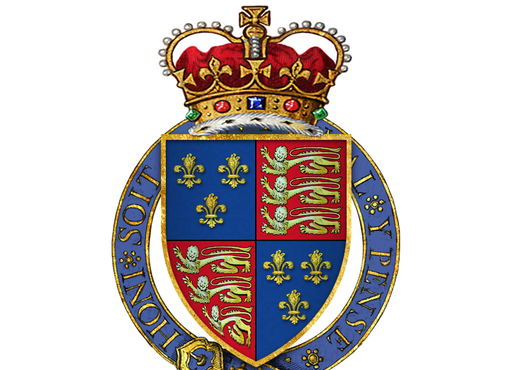
Richard III’s 1483 coup
It was with hindsight that the Wars of the Roses between Lancaster and York continued beyond 1471. Edward IV won the first and second wars 1459-71, decisively, and fathered as his heir a son who succeeded as Edward V in 1483. But Edward V was only twelve years old, too young to rule, and his power was therefore contested by at least three factions. First the queen’s family (the Wydevilles) seized power, before the king’s uncle, Richard Duke of Gloucester, staged a successful coup. Actually Richard’s coup came in three stages, as he defeated first the Wydevilles, second the courtiers, and finally took the throne as Richard III. Richard had had a successful career as a nobleman and soldier without aspirations for the crown when Edward’s premature death offered him both unexpected opportunities and perils. Certainly it was Richard who made himself king. Why he usurped the throne – and when he first planned it – is debatable. But rather than bringing order and reconciliation, Richard unleashed a third war that destroyed himself, his dynasty, and lasted for another generation.
Michael Hicks was Professor of Medieval History and Head of History at the University of Winchester. He has been a member of the Historical Association since the 1980s and published several papers in the journal History. He has published many books and articles on late medieval England and in particular the Wars of the Roses and the Yorkist royal family. His Richard III: The Self-Made King, published in 2019, considered the career of a great nobleman who was transformed unexpectedly into a king, who proved to be a disastrous failure and who destroyed himself and his dynasty.
Session 2: 11.20am
Prof Marisa Linton
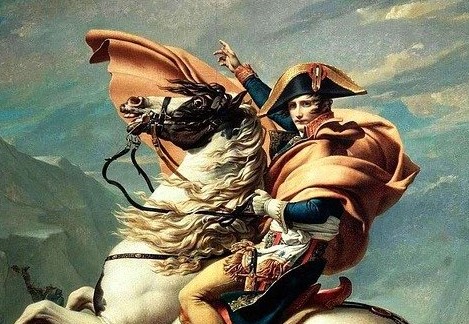
Napoleon Bonaparte and 18 Brumaire
It was the French Revolution that made the rise to power of Napoleon Bonaparte possible. The Revolution of 1789 brought down the centuries-old regime of absolute monarchy and privileged nobility. In its place the revolutionaries founded a new regime based on principles of individual liberty, equal rights, and popular sovereignty. Yet the ensuing ten years of political instability would be exploited by Bonaparte to seize power in a militarist regime which was, in some ways, more autocratic than that of Louis XVI and, in terms of the millions of casualties of the Napoleonic wars, much more lethal. Bonaparte was a talented tactician, adept in the use of propaganda, and he had military force behind him. He had political and financial backers – and he also had luck. This talk will explore how, over 18 Brumaire (9 November 1799) and subsequent days, Bonaparte used all these resources to overthrow the representative government of the Directory.
Marisa Linton is emerita professor of History, having taught at Kingston University from 1994 to 2019. She writes principally on the French Revolution, and the political culture and ideology of eighteenth-century France. Her interests include: the French revolutionary terror; leaders of the French Revolution, especially Robespierre, Saint-Just and the Jacobins; emotions in revolutionary politics; the role of women in politics and political culture. She is the author of: The Politics of Virtue in Enlightenment France (Palgrave, 2001); Choosing Terror: Virtue, Friendship and Authenticity in the French Revolution (Oxford U.P., 2013); and, with Michel Biard, Terror: the French Revolution and its Demons (Polity, 2021). She also co-edited Conspiracy in the French Revolution (Manchester U.P., 2007). She writes for history magazines, especially BBC History. She has made several appearances on TV and radio, most recently speaking about Robespierre for an episode on the French Revolution,inRoyal History’s Biggest Fibs,presented by Lucy Worsley, BBC2, 2020. She also works as a historical consultant, most recently for a forthcoming TV series based on the novel, Dangerous Liaisons, currently in production with Starz.

Session 3: 12.05pm
Prof Rana Mitter
Internationalism and ideology: the fall of the Nationalists and the Rise of Communist China, 1945-50
At the end of the war with Japan in 1945, Nationalist China sought a Sino-Soviet agreement in August 1945 to try and limit Soviet demands in Manchuria and China beyond. But then it also took a new position at the United Nations and sought global influence. However, attempts by General George Marshall to broker a peace and coalition government in 1946 broke up because of the increasing inability of the Nationalists under Chiang and the Communists under Mao to find any common position on how China would be governed. Between 1946 and 1949, the two sides fought a civil war. At first, the superior KMT forces seemed as if they could consolidate and destroy the CCP’s. However, various factors turned the tide. Improved CCP tactics made things work better on the battlefield, whereas the morale of the KMT was destroyed by poor military choices and economic chaos. Eventually Chiang had to flee to Taiwan, and the CCP conquered the mainland by 1949 with Hainan island following the next year.
Rana Mitter OBE FBA is Professor of the History and Politics of Modern China, and a Fellow of St Cross College at the University of Oxford. His books include China’s War with Japan: The Struggle for Survival, 1937-1945 (2013), which won the 2014 RUSI/Duke of Westminster’s Medal for Military Literature, and China’s Good War: How World War II is Creating a New Nationalism (2020). He won the 2020 Medlicott Medal from the Historical Association for Services to History. He is a regular presenter of Free Thinking on BBC Radio 3.
“I really enjoyed listening to different historians’ opinions on different events.“
Etienne
“I loved the thematic structure of the day that introduced me to different periods of history in greater detail, while the discussion was detailed and entertaining.“
Ben
“It was a fascinating new experience to see knowledgeable historians in action!“
Dominik
 cambridgehistoryforum.org